

Do Your Walls Need More Than Paint?
A coat of paint changes the colour of a wall and leaves the surface underneath as it was.
Cracks, dents and old patches stay visible through new paint, and damage caused by a leak or by movement in the house keeps developing after the wall is painted. These problems have to be repaired before the first coat goes on.
The sections below explain what causes cracks, nail pops, holes, water stains, bubbling paint and mould on interior walls and ceilings, and whether the painting crew repairs each one during prep or another trade has to fix a cause behind the wall first.
The final sections cover the lead and asbestos testing an older home needs before any sanding, and how the work divides between the homeowner, the painting crew and other trades.
Damage Under New Paint
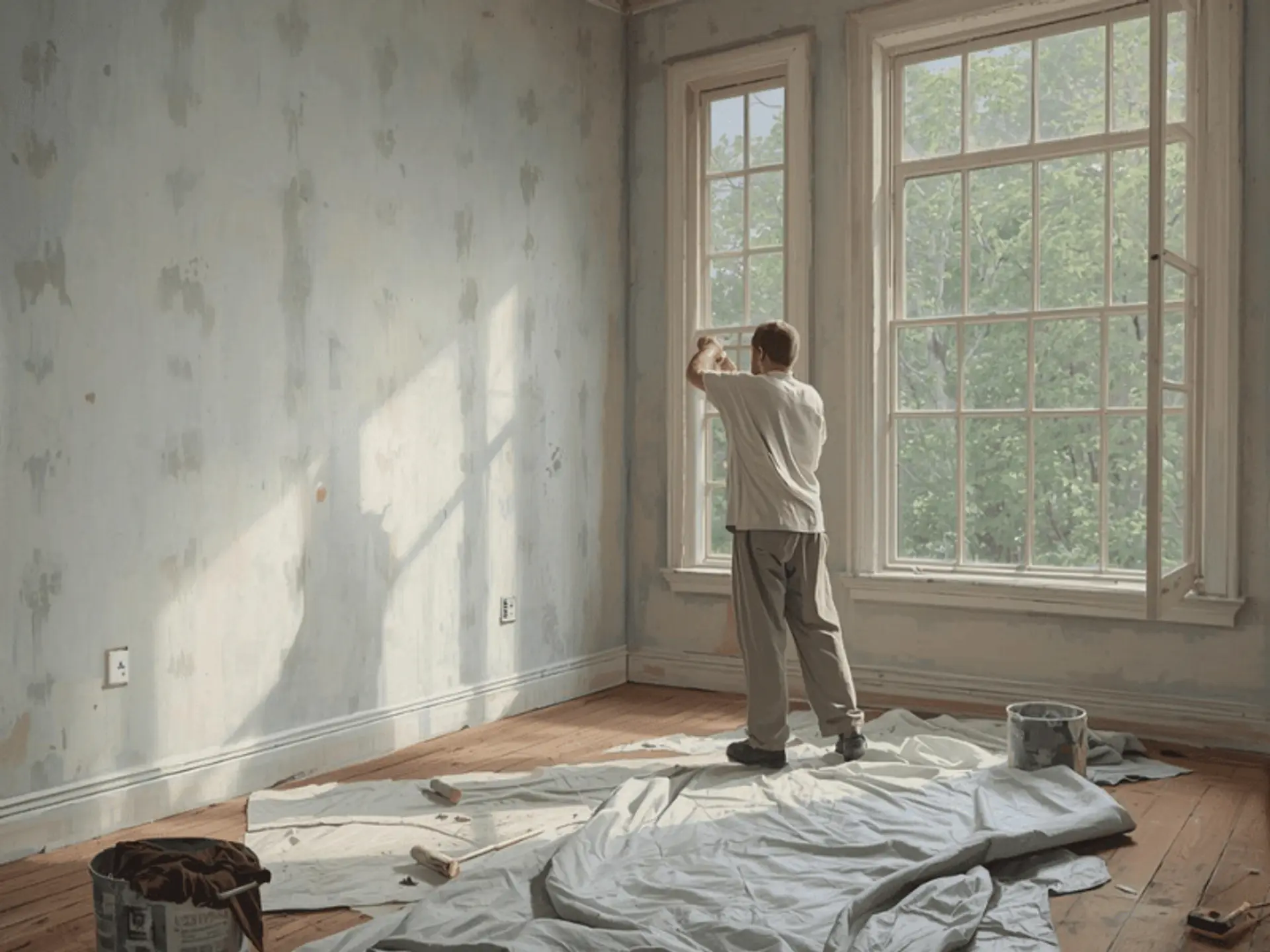
Paint forms a thin, even coating that follows the shape of the surface beneath it, so light from a window that falls across the wall casts a small shadow from every crack, dent or ridge.
CGC, the Canadian drywall manufacturer formerly known as the Canadian Gypsum Company, explains that joint compound and the paper face of drywall absorb paint differently, so taped seams and patches can show through new paint in direct natural light, especially under glossier paints.
CGC’s solution is a coat of primer over the whole surface, so the finish coats look even over the patches and the rest of the wall.
Cracks in Drywall
Thin cracks along drywall seams and small diagonal cracks at the corners of doors and windows are common surface problems. Canada Mortgage and Housing Corporation (CMHC), the federal housing agency, links the diagonal cracks to the wood framing shrinking as it dries.
The painting crew repairs these cracks during prep by filling and taping them and sanding them flat.
A crack that keeps getting longer or wider, or that opens again after it has been repaired, points to movement in the structure of the house. A structural engineer should assess cracks like these before the wall is repaired, since the movement will reopen any patch until its cause is fixed.
Gaps Where Walls Meet the Ceiling
On a top-floor ceiling under a trussed roof, a crack along the joint between an interior wall and the ceiling that opens in winter and closes in summer is a sign of truss uplift. CMHC research explains that the lower part of each roof truss, which sits in the attic insulation, can shrink more than the upper part in winter.
The truss bows upward as a result and lifts the ceiling away from the wall. The problem is worst in the first year after a house is built.
Since the gap reopens every winter, a patch of joint compound over it cracks again. The Journal of Light Construction describes several repairs for existing homes, such as crown moulding fastened to the ceiling only, which covers the joint and moves with the ceiling. Any of these repairs is done before painting begins.
Nail Pops
Nail pops appear as small round bumps or cracked circles in rows that follow the studs or ceiling joists. CMHC traces them to framing lumber that was still wet when the house was built. As the studs dry and shrink, the drywall shifts and pushes the nail heads out through the surface.
The crew repairs each pop by fastening the drywall to the framing with new screws beside the nail, then filling, sanding and priming the spot.
Holes, Dents and Water-Damaged Drywall
Nail holes and shallow dents are part of routine prep, and the crew fills, sands and primes them. A hole too large for compound alone, such as one made by a door handle, is patched with a new piece of drywall.
For drywall soaked by a leak, the Gypsum Association recommends replacement unless the water was clean and the drywall was dry and firm again within two days.
The damaged section comes out after the leak is repaired, and the written estimate should state whether the painting company installs the new drywall or brings in a drywall contractor.
Water Stains and Bubbling Paint
A yellow or brown ring on a ceiling or wall marks a place where water has reached the drywall. Health Canada lists the following signs of a moisture problem in a home:
- Walls or ceilings show stains or discolouration.
- Paint peels or wallpaper wrinkles.
- Plaster cracks.
- Wood warps.
- A white, powdery deposit called efflorescence appears.
- The room smells musty or earthy.
Paint doesn’t stop water from coming through, so a roofer or plumber fixes the leak behind a stain first. Once the wall has dried completely, the crew seals the stain with a stain-blocking primer so it doesn’t bleed through the finish coats.
Benjamin Moore attributes bubbling paint, which painters call blistering, to heat, moisture or both. The crew scrapes, sands and primes shallow blisters before repainting.
Blisters that reach the bare wall come from moisture, and Benjamin Moore’s guidance is to fix the moisture source first, for example by repairing loose caulking or adding an exhaust fan to lower the humidity.
Mould
Health Canada states that painting over mould doesn’t kill it or stop it from growing back. Where mould has grown under the paint, the affected drywall has to be removed and replaced.
Health Canada also sorts mould growth by the size of the area it covers, and the size determines who should clean it:
- A small area covers one square metre or less in no more than three patches, and a homeowner can clean it with proper precautions.
- A medium area has more than three patches covering less than three square metres in total. Health Canada recommends a professional assessment, though most medium areas can be cleaned with protective equipment.
- A large area is a single patch larger than three square metres, and a qualified professional should assess and clean it.
Mould that returns after cleaning is a sign that the moisture source is still there, so the painting crew starts only once it’s fixed and the cleanup is complete.
Lead and Asbestos in Older Homes
Health Canada states that a home built before 1960 probably contains lead-based paint, and that in homes built between 1960 and 1990, exterior paint may contain lead and interior surfaces may contain smaller amounts. Sanding lead-based paint or stripping it with heat creates toxic dust and fumes, so Health Canada advises against both.
A lab test of paint chips confirms whether lead is present. Home test kits are less dependable, since Health Canada found that their results vary from brand to brand and that the kits can miss lead beneath a newer coat of paint.
WorkSafeBC, British Columbia’s workplace safety agency, lists drywall joint compound and patching compound among the materials that may contain asbestos in homes built before 1990. Sanding old patches or cutting out drywall in these homes can release asbestos fibres into the air.
WorkSafeBC advises homeowners to speak with their contractor and budget for asbestos testing before renovation work begins.
Who Fixes What
Tresham Painting’s process includes a home evaluation, during which the crew assesses the surfaces, materials and preparation the job needs. Tresham’s prep includes cleaning, sanding, patching nail holes and minor drywall damage, caulking and priming before the finish coats go on.
Damage with a cause behind the wall goes to another trade before the crew starts:
- A roofer or plumber repairs the leak behind a water stain or soaked drywall.
- A structural engineer assesses cracks that grow or reopen after repair.
- A qualified mould professional cleans large areas of mould and assesses medium ones.
- A testing lab checks old paint and joint compound in an older home, and a contractor trained in lead or asbestos removal handles any material the tests identify.
The homeowner’s part of the preparation is clearing the rooms, wiping down the walls and pointing out any known damage before the crew arrives.
A detailed painting estimate lists the prep and repairs in the scope of work. Its terms should also say that extra work, such as hidden damage found after work starts, goes ahead only after the homeowner approves a written change order.
If you’re planning to repaint and want the walls assessed first, contact Tresham Painting to book a quote. Tresham serves homeowners across the Niagara region, Hamilton, Burlington and Oakville.