

Roller Marks and Brush Strokes on Newly Painted Walls
Why a Fresh Coat of Paint Still Looks Uneven
In the days after the painter has finished, a wall can show roller tracks, a dull patch over a repair, a darker band along the ceiling, or a shiny stripe partway across it. Most of these marks only become visible once the paint has dried.
Each kind of mark has its own cause, and the cause decides the fix. The sections below explain what flashing, lap marks and picture framing are and why each one forms.
They also cover how the roller and the amount of paint applied change the texture of a wall, and why one wall can look even in the morning and streaked by late afternoon.
The final section covers the standard professional painters use to judge a finished wall and when to raise a concern with the painter.
Paint Flashing
Flashing is the name for shiny or dull patches on a wall painted in one colour and one sheen, where the same paint has dried shinier in some places than in others.
The most common cause is a surface that absorbs paint unevenly. Fresh drywall compound over a patch or a taped seam between drywall sheets soaks up more of the paint than the painted drywall around it, so the paint over the patch dries duller. Bare drywall and spots sanded through the old paint absorb paint the same way.
A primed patch absorbs paint at the same rate as the wall around it, so the painter primes repairs before painting.
A spot that got one thin pass of the roller also dries to a lower sheen than a spot that got a full coat.
Touch-ups made after the job are another frequent source of flashing. A brushed touch-up on a rolled wall has a different texture, and paint from a different can has a different sheen, so either one shows even when the colour matches.
A touch-up blends best when the painter uses paint from the original can, applies it with the same type of roller that painted the wall, and thins the paint out toward the edges so the repair has no hard outline. Flat paint hides a touch-up better than any other sheen because it reflects so little light.
One additional full coat over the whole wall evens out most flashing. Where the cause is an unprimed patch, the painter primes the patch first, or the next coat flashes in the same place.
Lap Marks
A lap mark is a band of darker colour or higher sheen where the painter rolled fresh paint over paint that had already started to dry. That overlap has two layers of paint where the rest of the wall has one.
Lap marks form when the painter loses the wet edge, the boundary of paint still wet enough to blend with the next pass of the roller. Leaving a section to dry while working on another wall, or taking a break partway across a wall, lets that boundary dry before the painter rolls up to it.
Heat, direct sun through a window and an unprimed wall all speed up drying and make the wet edge harder to keep. Paint applied thinner than the label directs dries faster still.
A painter avoids lap marks by keeping the wet edge and stopping only at a natural break such as a corner, a door or a window. A lap mark partway along an unbroken wall shows where the work paused long enough for the edge to dry.
A touch-up can’t blend in a dried lap mark because it creates a new overlap, so the repair is another full coat over the wall, corner to corner.
Picture Framing
Picture framing is a darker or shinier border along the ceiling line, the corners and the trim. The border is the band the painter brushed along those edges (painters call this cutting in), and the lighter area in the middle is the part the roller covered.
A brush lays paint on thicker than a roller does and leaves a different texture, and a brush with coarse or splayed bristles adds ridges along the cut-in line. If the cut-in band dries before the roller reaches it, those differences stay and the band dries to its own sheen.
Deep colours and higher sheens make the border more visible. If the painter didn’t stir the paint well before use, the brushed and rolled areas can differ slightly in colour too.
Brushing the edges of a whole room before rolling any of it is the usual way the border forms. To avoid it, a painter brushes one wall at a time, keeps the brushed band to 2.5 to 5 centimetres, and rolls into it while it’s still wet.
A band much wider than that is a sign the painter didn’t run the roller close to the ceiling and corners.
Ontario’s new-home warranty guidelines accept brush marks in cut-in areas and on trim. A brush can’t match a roller’s texture in the last few centimetres against a ceiling, so that narrow strip isn’t a defect.
A border that shows from across the room does count as one. The painter corrects it with another coat over the cut-in areas to bring the edges to the same thickness and sheen as the rest of the wall.
Roller Stipple
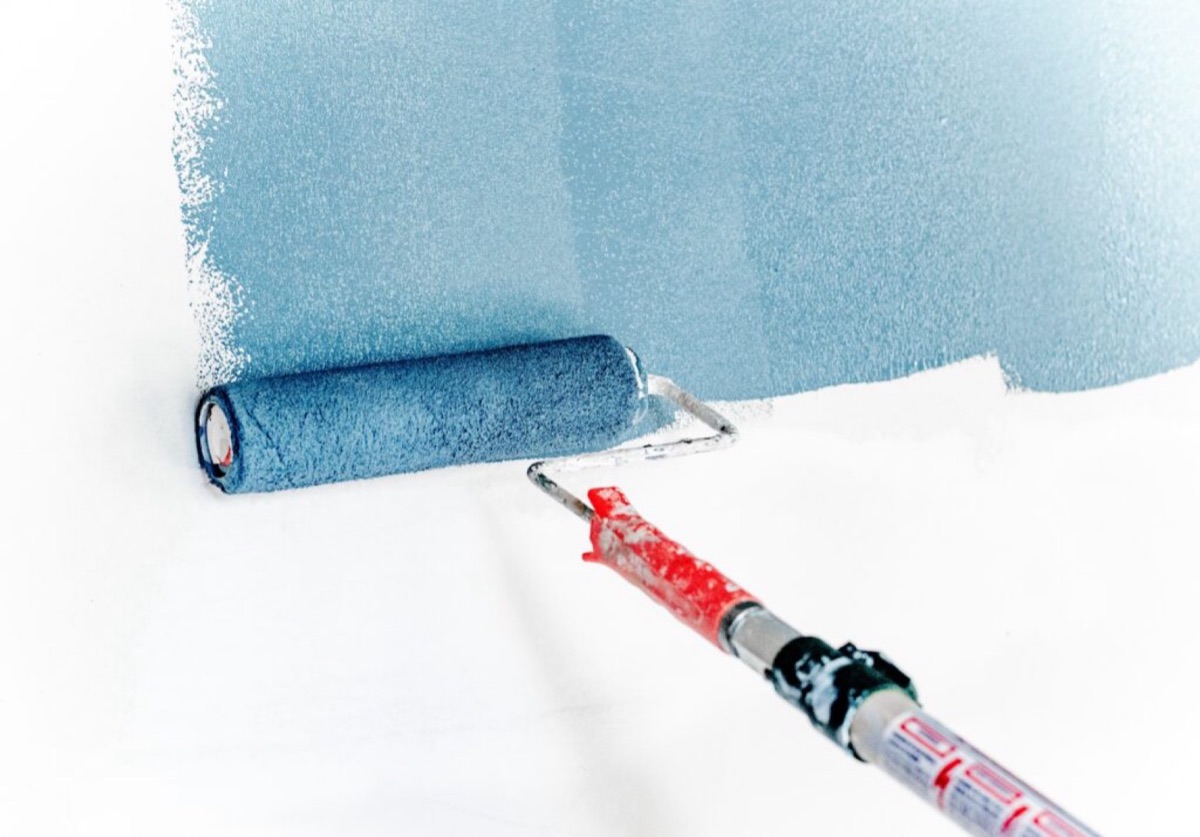
Stipple is the fine texture a roller’s fibres press into wet paint as they release it. Every roller leaves some, and a properly applied coat levels out most of it as it dries. Texture that stays raised after drying has the following causes:
- The fibres on the roller are too long for a smooth wall.
- A low-quality roller releases paint unevenly across its width.
- The painter rolls back over paint that has already started to dry and drags the surface instead of smoothing it.
- Paint builds up at the ends of the roller and leaves a raised line, called a track, along each pass.
The painter finishes each section of wall with light strokes in one direction while the paint is still wet, and those set the final texture. If a dried wall still has the crossing pattern of the first strokes, the painter skipped that finishing pass.
Another coat doesn’t level out raised stipple and tracks, so the painter has to sand them smooth first. A sanded patch beside an unsanded one shows as two different surfaces under side light, so the painter sands and recoats the whole wall rather than one spot.
Roller Fibre Length
Rollers come in different fibre lengths for different surfaces and sheens. Longer fibres hold more paint and push it into the low spots of a rough wall, while shorter fibres leave a smoother surface. The shortest are made for smooth walls and glossy paints.
A long-fibre roller covers a smooth wall faster, and it leaves an orange-peel texture that shows under side light.
A quality roller holds enough paint to lay down a full coat, while a cheap one sheds fibres that dry into the paint as small raised specks.
Too Little Paint
Every can of paint states how many square metres one litre should cover, and that figure assumes a coat of the thickness the paint was made to dry at.
If the painter spreads a can over more wall than the label allows, or rolls each load out until the roller is nearly dry before reloading, the coat is too thin to level out and dry at an even sheen.
Thin coats flash and hold stipple, and over a colour change they let the old colour show through in places. Two full coats of paint are the standard for full colour and a uniform finish, with primer first over patches and bare drywall.
A detailed estimate states the number of coats and whether it includes primer, so the homeowner can check a thin-looking wall against what the painter quoted.
Lighting and Sheen
The same wall can look even under the ceiling light at night and streaked beside a window in the afternoon. Light from a window in that wall, or from a light fixture mounted on it, reaches the surface at a shallow angle and skims across the paint.
It casts a small shadow from every ridge of stipple and every lap mark, a condition painters call critical lighting. The ceiling light at night hits the same wall straight on and fills those shadows in, so the marks disappear again.
A higher sheen makes the shadows more visible. Flat paint scatters light, so texture is hard to see in it. Satin and semi-gloss reflect more light, and because the reflection changes wherever the surface changes, they show texture that flat and eggshell finishes hide.
Drywall seams and screw heads that show through the paint under window light are a drywall finishing problem rather than a paint defect, because paint follows the shape of the surface under it.
Tresham’s prep covers patching and taping minor drywall damage, but a wall that needs a thin coat of compound over its whole surface to hide the seams is a larger drywall job.
Judging a Finished Wall
Under the painting industry’s standard for a properly painted surface, an inspector stands about one metre away, under the lighting the room normally has, and looks without magnification from where a person would normally stand.
Ontario’s new-home warranty guidelines use 1.5 metres under the same kind of lighting and note that natural light through the day changes how the surface looks. A flashlight held flat against the wall shows texture in every paint job, and no standard uses it as the test.
A walk-through under that lighting is the time to point out to the painter any wall that looks uneven, and the homeowner normally releases the final payment after it.
If a recent paint job in your home shows marks that don’t match the wall around them, or you want the walls checked before the next job starts, contact Tresham Painting for a free, no-obligation quote.
Tresham Painting is a licensed and insured painting company run by Darcy, offering interior and exterior painting for homes and businesses, cabinet refinishing and low-VOC paint options.
Every job includes a home evaluation, full surface prep (cleaning, sanding, patching, taping and priming) and a final walkthrough, and the crew serves homeowners across the Niagara region, Hamilton, Burlington and Oakville.