
Wallpaper Removal
Prepping Older Homes for Fresh Paint
Niagara Falls has a lot of old houses. Census figures from 2021 show that 13 percent of the city’s homes were built before 1945, and another 17.9 percent between 1946 and 1960. A further 13.6 percent date from the 1960s. Wallpaper was a standard wall finish through all of those decades. Much of it is still up, some of it under later coats of paint.
The wall behind the paper and the paper itself decide which method works and how much repair follows. Older houses have lath and plaster, later ones drywall, and lead paint or asbestos can turn up in anything built before 1990.
The sections below cover identifying the paper and the wall, the hazards in an older house, the removal methods, the leftover paste, and the sealing and repair work that follows.
Wallpaper in Older Niagara Falls Homes
Decorators papered the city’s Victorian and Edwardian houses over lath and plaster, and Chippawa and the Silvertown area near downtown still have plenty of them. They papered the bungalows of the 1946 to 1960 boom too, most often in kitchens and bathrooms. Vinyl wallcoverings arrived later, and homeowners used them widely in those same rooms through the 1960s and 1970s.
Some of that wallpaper is covering old lead paint.
Health Canada notes that wallpaper, wallboard, or panelling over a lead-painted surface adds a layer of protection. Leaving lead-based paint in place is sometimes safer than removing it, as long as the paint isn’t chipping and isn’t within reach of children.
Painting Over Wallpaper
Paint applied over wallpaper fails in four ways.
- The paste reactivates. Water-based paint softens the old paste underneath. The paste stops holding, and the new coat cracks, bubbles, and peels away with it.
- The seams stay visible. Every seam and overlap shows through the paint. Once the paint dries, those lines stay unless someone skim coats the whole wall.
- Latex won’t grip vinyl. A vinyl wallcovering gives the paint almost nothing to bond to.
- The paper gets harder to remove. The dried paint blocks water and stripping solution from reaching the paste, so stripping it later takes far longer.
Identifying the Paper and the Wall
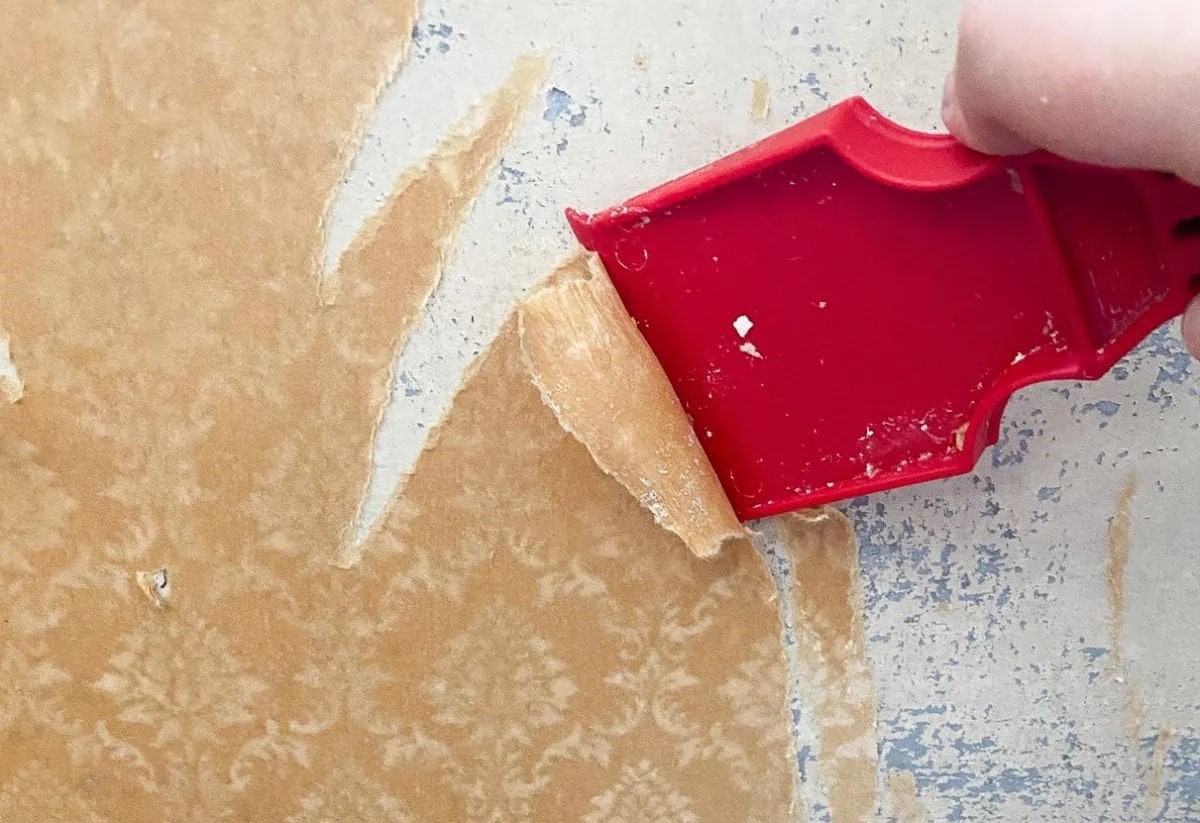
The test starts at an edge near a doorway or an electrical outlet. Sliding a putty knife under the edge and pulling back slowly at a shallow angle shows which of the three types is on the wall.
- Strippable. The full sheet peels away dry, leaving the wall bare except for some dried paste. Most newer, non-woven papers do this.
- Peelable. The decorative face peels away dry, and a paper backing stays stuck to the wall. That backing comes off separately, with a soak and a scrape.
- Traditional, or non-strippable. The paper tears into small pieces and resists water. Most pre-1960 houses have this type.
The number of layers matters as much as the type.
Decorators routinely papered straight over the old paper, and a wall with three or four layers behaves differently from a wall with one. The lower layers are older, drier, and bonded more firmly. Each layer also slows the solution down before it reaches the one beneath.
Builders used plaster over wood lath in Niagara Falls homes until roughly 1950, then switched to drywall. The two are easy to tell apart:
- Plaster feels hard and cold, sounds solid when you tap it, and often has a slight wave across the surface.
- Drywall sounds hollow, feels warmer, and gouges easily under a scraper.
On drywall, how much damage you do depends on whether anyone primed the wall before papering it. Paste over primer bonds to the primer, and the wallpaper comes away with the drywall underneath intact. Paste on bare drywall soaks into the paper face of the board and bonds to that instead, so the paper tears. Skim coating is part of the job in that case.
Lead and Asbestos
Neither one stops you from repainting. Both change how you work, how you seal off the room, and sometimes who’s qualified to do the job.
Lead
Health Canada says a home built before 1960 probably contains lead-based paint. Homes built between 1960 and 1990 may have lead-based paint outside, and interior surfaces from those years may contain smaller amounts that can still harm young children. Homes built after 1990 shouldn’t have it, since consumer paints in Canada and the United States were virtually lead-free by then.
Scraping wallpaper off painted plaster in a pre-1960 house can disturb the lead paint underneath.
Health Canada also warns against sanders, heat guns, and blowlamps for paint removal in older homes, because all three create dust and fumes containing lead. Wetting the paper first creates far less dust. Paint that’s chipping, or any plan to sand, calls for a test first.
A certified inspector can measure lead levels on site, or you can mail paint chip samples to an accredited lab.
Asbestos
Manufacturers put asbestos in drywall joint compound, plaster, and textured wall and ceiling finishes in Canada into the early 1980s, and it can’t be identified by eye. Sanding joint compound or plaster in a house built before the mid-1980s calls for a lab test first.
Removal Methods
The work goes in sections roughly four feet wide, floor to ceiling. The floor needs a drop sheet, because wet paste is slippery and the scraps stick to carpet edges and baseboards.
Dry Stripping
Dry stripping comes first, before anything gets wet. Paper that peels cleanly comes away in full sheets.
Hot Water and Stripping Solution
This takes off most of what dry stripping leaves behind.
Paper that resists water needs light scoring first. A garden sprayer or a sponge soaks it, and it sits for 15 to 20 minutes before the scraping starts. The next section can soak while the first one is being scraped. A wide, flexible knife at a shallow angle works best, and stubborn spots come away with more water rather than more force. A scoring tool cuts the wall as readily as it cuts the paper, so drywall needs a light hand.
Steam
Steam works well on plaster that’s still solid and is riskier on everything else. Held in one spot, it softens drywall and drives moisture into the board. Old plaster is brittle, and its grip on the lath behind it is often weak already, so heat and moisture can loosen whole sections. Short passes with the steamer plate kept moving do the least damage, though some plaster repair follows the job regardless.
Leftover Paste
The paste stays on the wall after the paper comes off, and once it dries it’s hard to see. Wiping a test section with a damp sponge makes it easy to feel. If the spot feels tacky or slick, paste is still there.
Hot water and stripping solution takes it off, and TSP works too. The wall then needs a rinse with clean water. The rinse water needs changing often, because a dirty bucket just spreads the paste around. The wall has to dry completely before sealing.
Leftover paste is one of the most common reasons paint fails after a wallpaper job. Manufacturers warrant their paint only on a properly prepared and primed surface, so peeling that traces back to paste falls outside the coverage. Paint Warranties Explained sets out what the coverage includes.
Sealing and Priming
Sealing comes next, once the wall is clean and dry.
A clear penetrating acrylic sealer does three things. It hardens the torn paper face of the drywall back into a solid surface, binds chalky or powdery plaster, and seals the last of the paste so water-based paint can’t reactivate it. It also stops joint compound from bubbling when you spread it over damaged paper.
It won’t block stains. Water rings, smoke, and tannin bleed straight through it, so those need a pigmented stain-blocking primer over top.
The skim coat goes on after the sealer cures. Standard all-purpose joint compound suits this better than a fast-setting product. It sands smooth once it’s fully dry, and any patches that open up need sealing again. Cracks and loose sections in plaster walls get filled and re-anchored at the same stage.
A stripped wall is rarely perfectly flat, and the finish you choose will either hide that or make it obvious. Flat and eggshell forgive a lot. Satin and semi-gloss show everything. Matte, Semi-Gloss, and Everything in Between covers the choice room by room.
Moisture on Exterior Walls
Vinyl wallcoverings don’t let water vapour through, which creates a problem on an exterior wall. In humid weather with the air conditioning running, moisture works its way in through brick or masonry, hits the cool back of the vinyl, and turns to water there, where mould feeds on the paste and the paper backing.
The room side can look perfectly clean, so you’ll only spot this while the wall is bare. Dark staining, a musty smell, or soft drywall on an exterior wall all need attention before priming.
Heritage-Designated Properties
The City of Niagara Falls has designated properties under Part IV of the Ontario Heritage Act. A designating bylaw can list interior features as protected heritage attributes. Section 33 of the Act requires written consent from municipal council before you alter anything likely to affect them.
Ordinary wallpaper is rarely a protected attribute, so most houses aren’t affected, but the bylaw is worth reading in a house with original decorative plaster or period finishes.
When to Hire a Contractor
A few situations call for a professional quote:
- Several layers of paper have built up over the decades.
- Someone painted over the wallpaper.
- The walls are lath and plaster.
- The house was built before the mid-1980s, so lead or asbestos may be present.
- The job covers more than a room or two.
Stripping a wall costs far less than repairing one somebody stripped badly. A quote that itemizes the prep is worth more than one that says “prep included”, and a written answer on hidden damage matters just as much. How to Read a Painting Estimate goes through both.
Tresham Painting handles interior preparation and repainting across Hamilton, Burlington, Oakville, Niagara Falls, Fonthill, Niagara-on-the-Lake, St. Catharines, Welland, Grimsby, Stoney Creek, and the surrounding area, with low-VOC and non-toxic paint options. The company is locally owned, licensed, and fully insured, and its residential work runs from small bungalows to heritage homes.
You can request a free, no-obligation quote through the site or by calling (905) 329-0545.